Categories
PPC Uncategorized

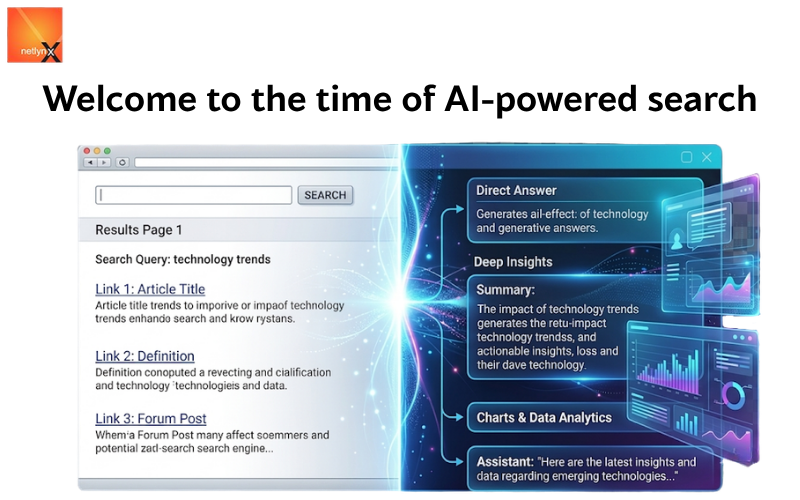
Welcome to the time of AI-powered search

Searching today is not about following links anymore; it’s all about receiving instant answers.

A few years back, online searching was quite simple. All you needed to do was type some words in Google, look at various sites, and compare data until you find an answer. Now, people don’t do that anymore.

People today ask questions as if they are speaking with a real person. Instead of showing blue links, search engines now provide direct, AI-generated search results and conversational answers. As a result, this shift has changed how businesses can show up online. At this point it's no longer about being ranked, but how you need to fit into the "answer" itself.

UNDERSTANDING THE SEARCH BY AI
What Are AI Overview and AI-Answers?

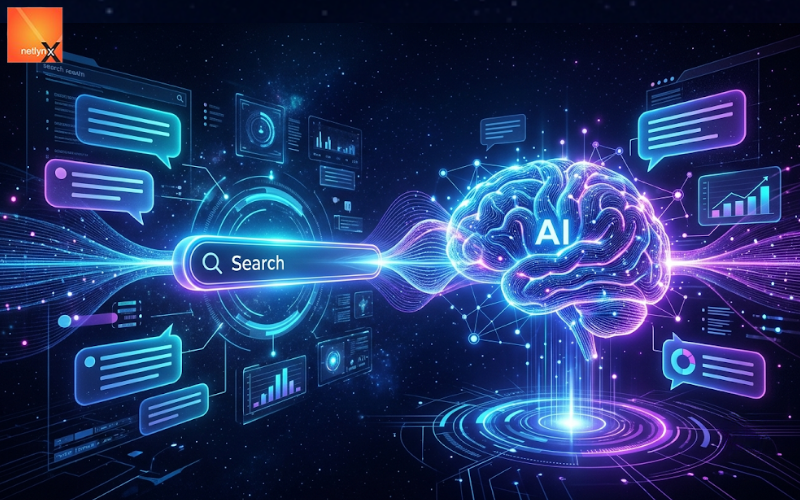
Today, with the help of AI, people have access to instant answers online instead of having to keep scrolling through blue links for hours. AI now gives you the information that you need as it relates to the search query, instead of going to different websites to research your question.

Your search engine displays AI overviews right at the start of your search query, to save your time and effort by avoiding the need to navigate through different websites. For example, if you look up "foods that're good for a healthy lifestyle," you will get a list of healthy foods like fruits and vegetables right away. You do not have to go to another website to get this information.

With AI Answers help you can have a conversational experience when you are looking up something on the internet because now the Artificial Intelligence understands what you are asking for and gives you a specific answer to your question. For example, by asking, "Since I spend the whole day in the office and would like to maintain my healthy lifestyle, what kind of foods do I need to eat?" The AI will provide detailed information based on your routine at work.

POSITIVE IMPACT OF AI ON SEO

Useful content gains greater visibility.

Over the years, many web pages were ranked by focusing on placement rather than helping customers. Now, with AI-driven searches, Google’s approach to content is changing.

Search engines now prioritise content that provides answers to questions along with value. Those websites that are producing useful content and are placed with people in mind are more likely to rank in AI-generated results.

This change rewards higher-quality content versus content that is stuffed with keywords.

The demand for conversational search is increasing.

Users today are no longer using short keyword searches; robotic phrases instead, they are using complete, natural-sounding questions like they are talking to each other.

That’s the reason why businesses at this point started investing in AI search optimization and putting more focus on text that is conversational and content that is created based on user intent.

As search engines continue to become more human-like, the content found on websites must also be written in a conversational tone.

AI search rewards high-quality content.

Artificial Intelligence depends on trustworthy and informative sources today. When you make content that people can understand easily, it is organized and really helps them. This content will do better in search results today. Companies that use AI SEO strategies in 2026 will focus more on making Content that teaches people something new, rather than just writing blog posts for no reason.

Strong SEO Still Matters

The AI search engines still care about businesses with SEO. A well-built website, good backlinks from other sites, and keeping a strong online presence help.

In fact, websites with SEO do better in AI searches. Their content is easy to read and understand, so people and AI can trust it.

This is why SEO for AI search engines begins with the basics: creating valuable content, maintaining a well-functioning website, building a clear and user-friendly structure, and establishing trust as an author. These fundamentals are not disappearing — they are becoming even more important with time.

Search Is Becoming More User-centric

AI today creates major benefits for users by enhancing their experience on the web. Search engines do not just want to look at keywords; they want to know what the user means by their keyword.

The search engine wants to know:

  • What does the user really need?
  • How can the user’s problems be solved?
  • What answer will be useful to the users?

Businesses from here on need to start thinking less about rankings and more about the overall experience of their customers.

NEGATIVE IMPACT OF AI ON SEO

Ranking on the first page is no longer a guarantee of getting clicks.

Back in the days, getting on the first page of Google used to be considered a huge achievement. But today, having high positions does not ensure that a site will generate traffic.

Some of the biggest named websites are getting fewer clicks than they did before because users want an answer to their question before clicking on a page. For companies that spend lots of time and money on creating content and SEO strategies, it will now be a big problem.

Modern search involves visibility, but also includes understanding and selecting information.

Zero-Click Searches Are Affecting Organic Traffic.

Several businesses and publishers have started observing a decline in their organic traffic since users get instant answers right from the search engines themselves.

While it is true that some information-based sites still perform very well in rankings but are receiving less traffic, it is because people no longer require visiting the website for simple information.

For all brands that rely on organic traffic for lead generation, customer engagement, and conversions, zero-click searches present a huge problem.

Users are trusting AI-generated search results more than websites

The way users search for information continues to change rapidly due to the increasing user- friendly experience by AI.

When users get instant replies from searches, rather than spending time by visiting different websites in search of more information. This makes gaining visibility in the online world tougher for businesses. And even the well-ranking sites might not be able to earn a click if the AI response fulfills their query.

IMPORTANT — The Problem & The Solution

A lot of businesses think that traditional SEO will be entirely replaced by AI.

Modern AI search tools will still be dependent on reliable and optimized information sources to produce results. Without appropriate SEO and quality content on your website, you will not see any mentions of your web pages in the generated responses.

And the reason why it has become crucial to know how to rank in AI Overviews?

The answer is to develop content that provides value, authority, readability, and optimization. It takes good SEO practices to get mentioned by AI!

WHAT BUSINESSES NEED TO DO

Create Content Based On Real Problems

Today’s best content engages an audience typically characterised by the following traits: written in such a way as to have human language used, and providing solutions to current-day challenges.

Businesses should not worry much about keywords and instead try to answer the questions that their customers are actually asking in a clear way. And think about what your customers want to know before they buy something from your business. Those questions that your customers ask are a way for your business to create good content.

Optimize Your Content for AI Search Intent

Content in the modern world should be structured and clear, easy-to-understand information written in plain language, with good headings, clear answers, and proper formatting, which helps the AI interpret the content correctly.

This has become one of the most important steps in optimizing for AI searches.

Therefore, the more understandable the content is for AI, the easier it is to trust.

FUTURE-DRIVEN

The Future of SEO Belongs to Humans AND AI Working Together

AI isn’t the end for SEO because it’s the next big step forward.

Companies that blend human creativity, emotional insight, SEO strategies, and AI knowledge will become increasingly visible in the years ahead.

Early Adopters of Change Will Remain Visible

With new developments in the digital world, there is some uncertainty in the beginning. Yet, businesses that adapt early tend to be well-positioned for the future. Companies that know how AI sees and understands their web content will remain at the top of the game.

Being Visible in 2026 Will Demand Smart SEO, Not Less SEO

The world of searching is evolving faster than many companies ever imagined. But this does not mean that SEO is dying; it only means that it is concentrating on creating more value, providing better experiences, and writing truly human content.

Being successful in SEO will not be about the amount of content that you publish in 2026. It will be about your ability to create high-quality, reliable, and relevant content for users.

While Artificial Intelligence search is changing how people find things online, the main goal of SEO is still the same: it is about helping people find the information in the easiest way possible and making sure they get what they are looking for.

Categories
PPC Uncategorized

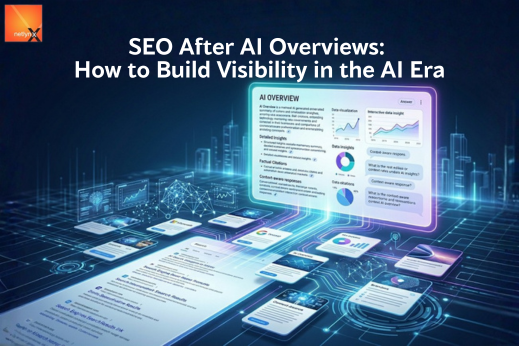
SEO After AI Overviews: How to Build Visibility in the AI Era

From Google’s AI Overviews to conversation-driven search features and answer-focused interfaces, everything about search has evolved beyond recognition. Rather than going through a list of ten blue links, users get summaries, AI recommendations, and follow-ups directly on the search engine interface.

And for businesses, this development couldn’t be more important.

Companies whose websites have been receiving large amounts of information-seeking traffic can expect their CTRs to change due to the shift. On the other hand, brands adopting new SEO techniques will find new ways to build authority and trust in AI-assisted search results.

And that’s when AI visibility on search will become one of the key objectives for SEO in 2026.

Modern SEO is no longer just about rankings. It requires businesses to develop strategies for securing citations in AI summaries, being featured in conversational searches, being recognised by entity recognition, and ensuring relevance in answer engines. The debates regarding AI and SEO have moved from theory into practice.

Terms such as AI search ranking optimization, AI crawlers optimization, GEO, and AEO have become core to the process described above. The discussion on which marketing strategy is more efficient – GEO, SEO, or AEO – is going to continue as search moves beyond ranking algorithms.

The businesses dominating in 2026 will not be just those ranked highly. They will be the sources AI will rely on

The Impact of Google AI Overviews on SEO

Google AI Overviews are now a key element of Google searches across various industries in 2026. From something that was just a test to something that has become a significant part of the search process.

When looking up information, Google provides AI overviews that summarize what other sites say on the same topic and, as a result, often eliminate the need to click external links to find the information.

It has influenced how SEO effectiveness is judged.

SEO could be done perfectly well, and a website could rank among the top three in search but generate fewer clicks than usual because the information was contained in the AI Overview already.

Now, brands must focus on:

Presence within AI-powered summaries
Mentions within generated answers
Brand Authority
Relevance in conversation

In 2026, visibility will not just depend on rankings. Rather, visibility depends on whether AI systems find your content credible enough to quote.

For this reason, AI visibility in search is now a more comprehensive strategy compared to organic SEO.

The Rise of AI-Powered Search Ranking

In 2026, search engines will use intelligence to look at information in a better way. Even though keywords and backlinks are still about what people want, search engine optimization that uses intelligence now cares about how good, relevant, and trustworthy the content is.

These rankings are based on things like being an expert on a topic, how much users like the content, being good at something, and making sure the content is accurate. So old ways of doing things, like putting many keywords in the content and making low-quality content with artificial intelligence, do not work very well anymore.

Google favors sites that go deeper into topics. Sites discussing AI searches, for instance, should talk about conversational searches, AI Overviews, answer engines, and search intent to enhance AI discovery through search engines.

How AI has reshaped Search Behavior?

In 2026, AI technology has totally transformed the way searches are carried out. Rather than just typing short phrases such as “best mobile phones” or “cheap hotels,” searchers are using much more elaborate and conversational search phrases such as “What smartphone has the longest battery life and the best camera for video creation?”

As a result of AI Overviews, Answer Engines, and Conversational Search tools, searchers have come to expect answers rather than just having to go from one site to another.

Trust-based search is another big change. Content that shows expertise, experience, newness, and direct answers is preferred by people. Generic content that has nothing unique to offer will become invisible.

In 2026, SEO is not just about page rank. It is about writing content that AI understands and trusts, to the point of summarizing and recommending in different searches.

Understanding GEO vs SEO vs AEO

One of the most discussed topics in digital marketing currently is GEO vs SEO vs AEO.

While the concepts are connected, there are certain differences that make each of them tackle various issues.

The good old SEO works by ranking website pages within the results provided by search engines. The approach remains crucial since search engines are still working via the classic ranking systems.

AEO helps optimize content so that AI engines can get relevant answers to search queries. In this case, the technique proves helpful when generating voice assistants’ responses, summarizing information in AI, etc.

And here comes the last concept, GEO, which is gaining much momentum and importance in 2026.

As the name implies, GEO is related to optimizing content for AI-based search algorithms. Instead of ranking pages, GEO allows brands to be treated as authoritative sources referred to frequently by AI.

For Example,

SEO is about:
“How can I rank?”

GEO is about:
“How can I become an AI’s source?”

This perspective brings some new approaches to handling content and building authority.

What Is Generative Engine Optimization (GEO)?

In today’s situation, it is one of the most popular trends in 2026. It revolves around the optimization of content for AI-based search experiences such as Google AI Overviews and Answer Engines.

Whereas traditional SEO aims to optimize websites for higher rankings on SERPs, GEO targets the inclusion of content within AI-generated responses.

Today, users receive instant answers provided by AI without clicking several links. As a result, organizations should have content that can be easily understood, trusted, and summarized by AI systems.

Key aspects of GEO include:

  • Structured content
  • Topical authority
  • Accuracy
  • Conversational tone
  • Helpful answers

In essence, traditional SEO increases the chances of visitors finding your site, while GEO increases the chances of AI recommending your content in search responses.

AI Crawler Optimization Techniques

AI-driven search has become increasingly popular in 2026, making it essential to optimize AI crawlers rather than relying on indexing alone.

Unlike old search algorithms, modern AI crawlers go more than just page scanning and perform structural analysis of the text, generating summaries, recognizing entities, and interpreting context. Therefore, web pages must be well-organized, contain proper headings, and have clear answer blocks.

Using schema markup also plays a vital role since it enables AI algorithms to understand FAQs, products, authors, reviews, and services.

The other significant trend is that of content quality, where generic and keyword-stuffed content generated by AI is losing its place among high-performing results in AI-based search engines.

How to Optimize Content for AI Answer Engines

AI algorithms tend to work better with clear and understandable content. Hence, businesses should stop focusing more on keyword optimization and begin creating content around user questions and intents instead.

Content should also address questions like:

  • How does AI influence people’s searches?
  • Why does the use of AI Overviews decrease click-through rates?
  • How do brands evolve to become more friendly to conversational searches?
  • What aspects does AI-based ranking focus on?

Doing this will help AI algorithms better understand the topic’s general context.

The formatting of the content is also essential. For example, if your content is defined with subheadings, short descriptions, direct answers, and logical order performs much better since AI can analyze it more effectively.

In other words, the clearer and more beneficial your content is, the greater your chances of showing up in AI answers.

Strategies to Increase AI Search Traffic

In 2026, raising AI search traffic involves making brands think about authority, trustworthiness, and valuable content as opposed to just targeting high amounts of traffic.

Content that has been highly targeted always works because people like to get insights and make decisions by clicking.

Examples:

  • Comparisons of products
  • Industry analyses
  • Step-by-step tutorials
  • Comments from experts
  • Research-based articles

Trust is also increasingly valued in AI search, since AI-powered search engines favor credible and trusted sources.

E-E-A-T and Brand Authority in AI Searches

The importance of E-E-A-T for AI searches is higher than ever. Search engines have started to reward content that reflects true expertise, experience, authority, and trustworthiness.

AI algorithms have been working to minimize the spread of false information, focusing on the authority of brands and trustworthy websites.

Content created by real experts and based on personal experience and insights will rank better not only in organic rankings but also when presented by an AI system.

That is also the reason behind the rise of thought leadership content in this new era, with artificial intelligence relying on trustworthy sources.

Future Trends of AI Search Visibility

Moving forward into 2027, it is expected that we will see an emergence of “Personalized AI Rankings.” Not only will the AI give a general overview, but also a personalized overview based on your behavior.

The future requires a “Multi-Channel Authority” in order for AI to keep track of your presence. Your brand should be able to appear across platforms, such as videos and podcasts, as this is how AI keeps track of trending topics.

Conclusion

Search transitioning from being a simple link directory to becoming a generative answer engine represents the most impactful development in the history of digital marketing. By learning how to distinguish between GEO, SEO, and AEO, as well as concentrating your efforts on AI-based search ranking using structured and data-driven content, you can make sure that your brand stays visible.

While in the past, your only goal was to get noticed, today you should strive to be cited by other users and AI algorithms. As we move into 2026, the successful brands will be those that adopt Generative Engine Optimization as one of their core components.

Key Strategies for Staying Visible in an AI-Powered Search Engine.

Focus on Getting Value: Don’t post content unless it offers something new and unique to the dialogue already taking place.

Be Familiar with the “Answer First” Approach: Build content where the most significant benefits are provided by the first two paragraphs.

E-E-A-T As It Matters: Make sure that you’ve done the proper author verification and have a solid profile in Google’s knowledge graph.

Optimize for Citations Over Clicks: Create content where the AI needs your citations to provide its answer.

Categories
PPC Uncategorized

ADA Compliant Web Design in Fairfax: How an ADA Compliant Web Design Agency in Fairfax can protect your Business

With today’s fast paced world, business’s website is often considered by the customers as the first way to contact and connect. If the website is not accessible to every type of audience that is an audience with any kind of disability, then the website might be limited only to certain audiences. For websites to target every type of audience, having ADA compliance is essential. An ADA compliant website allows all the audience to have easy access to your website, increasing the user experience and reducing any legal or bounce back risk. Businesses in the competitive market of Fairfax need to invest in ADA compliance.

What does ADA compliant refer to?

Americans with Disabilities Act (ADA) is a formal report filed when some faces discrimination due to any kind of disability in areas like employment, public services, transportation and public accommodation (businesses serving the public).

It is a civil right of enforcing the ADA for delivering equal rights and opportunity to disabled audiences, ensuring every individual to have easy access to goods, services and participation as everyone, leading to fulfilling requirements for physical and digital modifications.

Understanding the Basics and Importance

An ADA website is about being accessible and inclusive. Many Americans have some kind of disability and inaccessible websites create barriers that keeps them away from engaging with online content, services and content.

The importance of ADA compliance is beyond ethics. ADA compliance is not just limited to legal protection, it is all about being usable and inclusive. An accessible website can help in improvising the overall experience for every type of visitor not just limiting it to disabled or undisabled audience.

The ADA compliance include:

  • Making digital content accessible to a wide range of audience.
  • Improving website structure, readability and navigation.
  • Enhancing SEO with clean code.
  • Strengthening brands credibility and audience trust.

For businesses, ADA compliance demonstrates social responsibility, builds trust, and expands market reach while protecting against costly legal disputes.

Working of ADA website compliance services in Fairfax

An ADA compliance website service focuses on identifying barriers and correcting them through technical improvements for easy accessibility. These ADA compliant website services in Fairfax follow a structured solution of designing to ensure a long term user experience. With comprehensive audits the service providing team identifies the areas where the website is failing to meet the accessibility standards.

The compliance process includes:

  • Accessibility audit based on guidelines.
  • Identifying design, content and code issues.
  • Implementing the accessibility fixes.
  • Testing the assistive technology.
  • Consistent tracking and support.

With these compliance, it ensures that the website remains accessible with every content and technology evolving. The professional ADA compliance services ensure the accessibility is fixed for a long term for aligning with evolving regulation and practices.

ADA compliant web design and services

The ADA compliant web designs integrate easy accessibility into every stage of website development. These ADA compliant designs focus on building websites with easy accessibility. At Netlynx Inc, the team of experts help in designing websites that are balanced in access, functions and visual appeals.

We offer services like:

  • Clear navigation structure for easy user flow: The team designs a seamless navigating system that is logically organized for users to move throughout the website with any confusion. Clean menus, structured page layouts and predictable navigation paths help users who use screen readers or keyboard navigation, to find information quickly.
  • Proper heading and readable typography: Here we implement a clear heading structure with the use of correct HTML heading levels for ensuring content is easy to understand and it is navigation. This can be helpful for screen readers to interpret page structure accurately while improving readability for all users. Readable typography, appropriate font sizes, and sufficient spacing enhances accessibility.
  • Keyboard accessibility form and interactive elements: Forms, buttons and interactive elements are designed to function efficiently with keyboard navigation. This ensures users who cannot use a mouse can complete forms, submit information, and interact with website features without barriers. Focus indicators and logical tab order are carefully implemented to improve usability.
  • Descriptive alt text for image: By adding meaningful text alternative text to image helps users rely on screen reader to understand the visual content. A descriptive alt text conveys the purpose of an image rather than just its appearance and ensures important information is not lost.
  • Caption and transcripts for multimedia content: Videos and audio content are supported with accurate captions and transcripts to ensure accessibility for users with hearing impairments. This also benefits users in sound restricted environments and improves content comprehension, engagement, and compliance with accessibility standards.

The ADA compliant web design in Fairfax ensures creating websites that are easily accessible to all the audience.

Why you need an ADA compliant website

An ADA compliant website company in Fairfax keeps your business protected from any legal exposure by improving engagement and usability. Inaccessible websites can risk lawsuits, lost customers and reputational damage.

Core reasons to invest in ADA compliance include:

  • Reducing the risk of ADA related legal action: By ensuring your website meets accessibility standards, you significantly lower the chances of facing ADA related lawsuits or legal complaints. Proactive compliance helps protect your business from costly settlements, legal fees, and rushed remediation.
  • Expanding reach to users of all abilities: An accessible website allows people with visual, auditory, motor, and cognitive disabilities to use your digital services without barriers. This expands your audience and ensures your business can serve a wider and more diverse user base.
  • Increasing engagement and conversion rates: When a website is easy to navigate and interact with, users are more likely to stay longer and complete desired actions. Accessibility improvements often lead to better usability, higher engagement, and improved conversion rates.
  • Improving search engine visibility: Search engines favor websites with clear structure, accessible content, and clean code. ADA compliant practices such as proper headings, alt text, and readable content contribute to stronger SEO performance and higher rankings.
  • Demonstrating commitment to inclusivity: An ADA compliant website reflects your commitment to equal access and social responsibility. This builds trust with users, strengthens brand reputation, and shows that your business values inclusivity and user experience.

Choosing Netlynx Inc for your ADA compliance services

Netlynx Inc is a trusted ADA compliant website that offers an end to end accessible solutions according to the business need to align with the brand identity. The team of experts stay current with evolving accessibility standards and legal expectations, ensuring long term compliance. Key reasons of businesses choosing us:

  • Customized ADA compliance remediation: We develop tailored accessibility solutions based on your website structure, industry, and business goals rather than applying generic fixes.
  • WCAG aligned audits and remediation: Our audits follow WCAG standards to identify accessibility gaps and implement precise, compliant remediation measures.
  • Ongoing accessibility monitoring: We continuously monitor your website to ensure accessibility is maintained as content, features, and technologies change.
  • Expert guidance on legal requirements: Our team stays informed about ADA regulations and accessibility expectations to help you navigate compliance with confidence.

Experts of our company focus on sustainable compliance rather than temporary fixes. Our approaches ensure long term accessibility and website growth by creating structured design, clear code that supports business for a long term.

How ADA impacts your website

ADA compliance influences how a website is designed, developed, and maintained. Accessibility requirements affect navigation, content structure, and user interaction. ADA impacts include:

  • Accessible images and multimedia content: We ensure images include descriptive alt text and multimedia content is supported with captions or transcripts. This allows users relying on assistive technologies to fully understand visual and audio information without barriers.
  • Keyboard friendly navigation and controls: All menus, buttons, and interactive elements are designed to be fully operable using a keyboard. This ensures users who cannot use a mouse can navigate the website smoothly and complete actions efficiently.
  • Readable layouts and consistent design patterns: We use clear layouts, proper spacing, and consistent design elements to make content easy to follow. Consistency helps users understand how to interact with the website, improving usability and accessibility.
  • Improved usability for mobile users: Accessible design improves performance on mobile devices and slower internet connections by simplifying layouts and optimizing content. This ensures a smooth user experience across devices and network conditions.

Legal landscapes of ADA compliance

The legal expectations surrounding ADA compliance in Fairfax continue to grow. Courts increasingly recognize websites as public accommodations, making digital accessibility a legal obligation.

  • Websites as public accommodations: Courts increasingly treat websites as public accommodations, requiring them to be accessible under the ADA.
  • WCAG as the legal benchmark: WCAG guidelines are commonly used by courts as the standard for evaluating website accessibility.
  • Rising number of ADA lawsuits: ADA related website lawsuits are increasing, affecting businesses of all sizes across industries.
  • State and industry specific considerations: Some states and industries enforce stricter accessibility requirements beyond federal expectations.
  • Proactive compliance reduces legal risk: Maintaining ADA compliance proactively helps reduce lawsuits and legal penalties.

ADA lawsuits may refer to WCAG standards for reinforcing the importance of proactive compliance for business websites. In Fairfax, businesses websites prioritize accessibility for all types of audience and reduce any legal or financial risk.

Conclusion

ADA compliance is essential for building an inclusive and successful digital presence of a business. An accessible website ensures that users of all abilities can easily navigate, interact, and engage with your content. Beyond legal protection, ADA compliance improves usability, enhances SEO, increases customer trust, and expands your market reach. For businesses, ADA compliant web design agency in Fairfax, social responsibility while reducing legal and financial risks. Partnering with experienced accessibility professionals ensures long term compliance, better user experiences, and sustainable business growth in an evolving digital landscape.

Categories
Uncategorized

8 Conversion-Focused Design Strategies for ECommerce Website

At present, an eCommerce website now serves as nothing more than a storefront; the rest is done by the business around the eCommerce site to protect your brand for success in an automated economy. If it doesn’t include user experience and conversion optimization, you are literally leaving money on the table. 

These days, fantastic competition is so prevalent that wonderful products do not market themselves anymore. A web designer really needs to have in mind exactly what makes a potential customer visit the website with the prospect of transforming them into a loyal customer after the time spent visiting it.
The essence of this blog post is to review an 8-challenged and proven set of design techniques that primarily scale conversion efforts. Whether you are developing a new store or updating the existing one, these tips will fight back with expert eCommerce development advice.

Why Does eCommerce Website Design Matter So Much?

The layout and working of your website can seal or facilitate the sales. Besides the standard marketing requirements associated with a website, eCommerce sites have such advanced requirements as:

  • Handling Secure Payment
  • Managing Real-Time Inventory 
  • Easy Navigation & Checkout 
  • Robust Order Fulfillment System 

The better you design your website, the more visitors you attract to it and the more conversions you generate. If you are really considering setting up an eCommerce business, you should first choose the right ecommerce web design company

Many of the entrepreneurs who have presently rolled out their marketing web portals feel that merely displaying photographs of their products would suffice; Unfortunately, however, such great success comes because of careful design, usability, and SEO strategy, among other things.

1. Keep It Simple and Intuitive

A layout cluttered or disorganized proves to be an instant turn-off where potential customers are concerned. Clean, neat styling always prevails against navigation in a manner that detracts from the product focus. Key Ingredients:

  • Well-organized hierarchical logical categories
  • Clear navigation menu
  • Sufficient white space for spare reading
  • Clear recognition search bar

Nothing can deliver a great shopping experience like a user-friendly and easily navigable website designed with the help of an eCommerce web designer.
An ecommerce website design company will, however, consider the end goal by looking into Geolocation, demographics, SEO aspects, etc. It is a good practice to design your store with an eye on the target audience, as this could increase footfall. Today, making an eCommerce website has fortunately become easier than ever in the past couple of years.

2. Optimize for Mobile-First Experience

You wouldn’t believe it, but over 60% of all surfing happens on smart devices. If your site is not optimized for mobile, you are losing another segment of your audience. Best practices for mobile optimization:

  1. Resize and adjust layouts according to screen size.
  2. CTAs should be within reach.
  3. Load rapidly.
  4. Collapsible menu for easy navigation.

Optimized configurations concerning mobility are perpetually programmed to the supreme professional eCommerce web design services. Literally every second counts in this regard. Speed, simplicity, and interactivity are what every user demands.

3. Use High-Quality Product Visuals

The fact that you cannot physically see the product is one of the main problems with online shopping. Therefore, ensure to take high-quality images and videos of the product. The better the quality, the better conversion rates you will receive. Let the user zoom in and have a clearer perception of what the product looks like, rather. On top of that, you can convert image to video to transform your existing product shots into compelling visuals that keep shoppers engaged longer.

There can be no doubt about the fact that all the photography will be the magic wand to make the store flow with smoothness-like. In order to keep the sales momentum going for the website, the pages should have lightning-fast load speed, so that customers get what they want. The important points you should know are below:

  1. High-quality product images
  2. Zoom-in option
  3. Images from various different angles
  4. Product demo videos

4. Builds Strong Call-to-Action

It is the last nudge needed by a user towards conversion. Your CTAs, whether “Add to Cart”, “Buy Now”, or “Start Shopping”, should be eye-catching, contrasting in color with the site design, and oriented toward action. Here are some tips for good CTAs: 

  • Make buttons pop by using contrasting colors 
  • Keep the text short and sweet 
  • Make sure your CTA is placed above the fold and at the end of the product description

Well-placed CTAs speak of the prowess of an ecommerce web design agency, leading your users clearly and definitively through the sales funnel.

5. Simplify the Checkout Process

Here are some of the most important pain points in eCommerce: Cart abandonment is just one of them, and a long, confusing checkout process happens to be one of the biggest reasons. Freeing up the checkout flow will immensely increase conversion. Check out simplification matters:

  • Support guest checkout.
  • Minimize the number of form fields.
  • Offer auto-fill options.
  • Provide a progress indicator (e.g., Step 1 of 3).

6. Leverage Social Proof and Trust Signals

Yes, shoppers are online and skeptical, so they’ll probably wait to know how safe or credible your brand is before making a purchase from it. Social proof and trust signals will provide them with that reassurance. Trust-building features:

  • Confirmed reviews and ratings 
  • Happy customer testimonials 
  • Trust badges (SSL, secure payment logos)
  • Clearly defined returns policy

An expert kinda ecommerce website design agency will place these signs ideally all over your site so they can build benefit-confidence credibility.

7. Personalize the Shopping Experience

Today’s these consumers now require more than the usual experience. They become loyal to your brand, as perceived by users of personalized content catering to such unique needs, with conversion rates at par with the highest. Such advanced features of personalization include the following: 

Show recently viewed products.

Personalized product recommendations according to browsing behavior 

Dynamic homepage content for returning users 

Exclusive offers or discounts 

8. Optimize for Speed and Performance

A website without life and slow would actually spell death to the conversion process, with nothing left to convince. However, user performance is an important factor, even as the ranking positions are mostly relying on search engines. The speed-increasing strategies are:

  • Compression and next-gen image formats
  • Browser caching and use of CDNs
  • CSS, JavaScript, and HTML minification
  • Elimination of render-blocking elements

Final Thoughts 

Designed to be conversion-friendly is not a fancy blend of elements or bombarding the visitors with information. It is about creating a user experience that seems organic, engenders trust, and converts action. Appropriately and strategically done design for a website can help you make huge profits. Are you in the hunt for the best eCommerce design services? Here, at Netlynx Inc., we offer custom eCommerce web design services that guarantee tangible results. Not only do we offer eCommerce development services, but we also build digital storefronts that convert browsers into lifelong customers. For measurable growth through expert eCommerce website design, contact us today.

Categories
PPC Uncategorized

5 Essential but Underrated Skills for PPC Management Success

PPC Management campaigns don’t just run by having keywords and bids. The true winners in the pay-per-click world appreciate the small things—disregarded for the most part—that can bring significant rewards. These are the skills that give you that little extra edge, especially when you are paying for each click.

If you are dealing with a PPC Company, do your in-house ads, or have been thinking about which would be the best PPC agency to work with, take note. These neglected skills could be a little why your campaigns have been underperforming, or else, they’re about to sprint. Here, then, are the top five skills often overlooked by each successful PPC campaign.

1. A Deep Understanding of Customer Psychology

People always give advice about keywords and bidding. But what makes people click, convert, and become loyal customers? Knowing the psychology of your audience matters a lot in PPC. The intelligent PPC management services know that ideal advertising campaigns don’t feel like a hard sell to customers; they feel more like a conversation.

Every keyword, basically, stands for an intent-based moment. Some users search because of the research, some intend to purchase the product, while some might be just curious. An ad should speak to all intent levels, which sometimes surpasses having a strong headline.

How PPC benefits from psychology:

  • Using emotions (fear of missing out, trust, curiosity)
  • Full of powerful words and irresistible calls to action tailored to the user’s mindset
  • The ad copy resonates with landing content that says, “Here’s why it’s important and why you should do something now,” or in major pain points that they might experience, that this product will eliminate. This is basically friction removal.

Psychological cue practices:

  • Scarcity messaging (“Only 2 left in stock!”)
  • Social proof (“Trusted by 10,000+ customers”)
  • Personalization (“Made for busy professionals like you”)

2.  Creative Strategy That Converts

The common populace holds an ominous thought that creativity is the advent of AI, being the cause of the past two years. If anything, this is why modern people realize that the apt skill to create intelligent, appealing, edgy, unique, and thought-provoking creative art is going to be worth its weight in gold.

Creative is advertising’s father. It will never cease being at the heart of any advertising strategy. To stand away from the mediocrity that is so often put forth by ChatGPT into sundry channels would be a great deal, especially for building a brand and for companies acting in a marketplace filled with so much competition.

When businesses want quantity over quality, ChatGPT and Gemini would be the answer. The advancement in technology and lowered entry barriers will open the doors even for non-industry people to produce good advertisements, inevitably leading to higher standards being recognized. We do realize that this will thrive even when brands engender user-generated content for their desired image, since the stock of genuine content is ever-increasing.

3. Mastery of Landing Page Optimization

Your ad may be the ultimate click magnet, but that is just the beginning of a long redemption period. If the landing page that a click leads to doesn’t create a seamless, persuasive experience, the user, who is going to bounce, will waste a click.

Landing pages have to be more than just a pretty face; they need to load fast, be useful, instill meaning, instill confidence, and lead the users to act. Funny enough, many companies talk about the disconnect between PPC agencies and website teams or content teams; what a costly mistake!

Here are some effective landing page skills:

  • Consistent messaging in ad and landing page (headline match, tone, offer)
  • Fast-loading, mobile-optimized pages
  • CTAs clearly visible above and below the fold
  • Trust factors, i.e., testimonials, guarantees, a badge of secure checkout

Common landing page sins:

PPC management services
  • Mismatched messaging is causing confusion
  • Mobile-unfriendliness
  • Long or distracting forms

4. The Art of Reading Between the Lines 

Of course, those metrics are the basic things to track: CTR, conversion rate, ROAS, etc. But numbers do not show everything that is there to consider. The few who are able to empathize and interpret with numbers are rare; that would be an ability to ask: why behind what? 

A campaign may have an unusually low conversion rate. Are the ad texts behind it? Or the offer? Or maybe the landing page does not match the user’s intent? Top-tier PPC services do not look at surface metrics but rather probe into user behavior with a deep focus. They analyze patterns. They construct those emotional connections. And they act. 

And this is what sets apart the best PPC companies: they do not merely view metrics as numbers to be reported — they diagnose the figures and respond forthwith.

5. Cross-Platform Awareness

Will we then admit it: Google Ads is not the only game now? With these platforms offering ad space, a present-day PPC manager must be aware of the strengths (and quirks) of each of these. 

The catch with these platforms is that they cater to different audiences, different goals, and different messaging styles. So, one cannot simply copy/paste the same campaigns on every platform. 

Given this, a good PPC agency will be worth every cent, as they understand such little nuances of a few platforms and can decide when and how it should be harnessed for a brand.

Why These Skills Matter More Than Ever

PPC Management

PPC increasingly gets smarter and faster by the day, not to mention competitive. Automation is developing, with AI tools improving; thus, the importance of human skill has become even greater.

These tools are beginning to standardize. The difference lies in the application of those tools. 

If your campaigns are not converting, causing clicks to grow costly and ROI to diminish, maybe it comes down to the fact that the strategy is not really broken, but lacks the human touch.

Final Thoughts 

Increasing automation and making tools standardized creates room for such underestimated human skills to run the show. Data interpretation, psychology, page optimization, agility, cross-channel fluency — all are relevant, not just “nice-to-haves.” When you are tired of campaigns that nobody understands are wrong, it could be time for a bit of consideration on what else is essential. Then, the question becomes: who are the best PPC management services for you? Netlynx Inc. will answer that question through tailor-made PPC services designed for your aims, budget, and stage of growth.  Click here and start discussing your project now.

Categories
Uncategorized

8 Game-Changing ADA Compliance Trends to Watch in 2025

Today, an accessible website complying with the Americans with Disabilities Act (ADA) is not just a legal requirement but also a moral obligation and a business necessity. As technology changes, the very perception of what comprises ADA compliance and web accessibility shifts as well. Certain major trends will dictate the route of web accessibility in 2025.

95.9% of websites still fail to meet ADA accessibility standards to the most minimal requirements- that scary figure demands greater attention. As we enter 2025, it is best to stay ahead of the curve by jumping on these latest trends, tools, and strategies for ADA-compliant website design services

So now you are probably curious, in this blog, we are going to take a detailed look at 8 Game-changing ADA Compliance trends to watch in 2025. Without wasting any time, let’s get straight to the point.

1. AI-Powered Accessibility Enhancements

Artificial Intelligence continues to impact the very landscape of digital accessibility. As the calendar moves toward 2025 and after, a rise shall be seen, incrementally, in AI-powered solutions that attempt to pinpoint real-time ADA compliance issues and rectify them. Such advanced systems can:

  • Suggesting alt text for images
  • Automatically tag form fields
  • Detect contrast issues and suggest fixes
  • Provide voice assistance for navigation 

As much as AI technology is a wonderful help, even today, it cannot replace human intervention. It is fast becoming the most important avenue for any ADA-compliant web design agency. With human intelligence and AI accuracy, compliance improves, audits become faster, and the user experience becomes more inclusive.

2. Accessibility by Design: A Shift from Retrofits to Foundations

There was a time when accessibility was just an afterthought, as something to be fitted in after the main event. Come 2025, however, ADA Compliant website design companies that are top ranking in ADA Compliant Website Design will have endowed the very DNA of websites with accessibility right from concept and design down to coding. This shift-left approach looks at: 

  • Semantic HTML structuring 
  • Mobile-first responsive layouts that are screen reader compatible 
  • Clean navigation logic using ARIA landmarks 
  • Design systems with built-in accessibility features

3. Voice Navigation and Conversational Interfaces

ADA-compliant website design company

Actually now that happening, with voice search and smart assistants are becoming routine, ADA-compliant website designers are trusting voice interfaces to create more inclusive experiences. Ideally, a person with limited motor skills or someone who is visually impaired should be able to:

  • Navigate a website by voice
  • Fill out forms using speech-to-text
  • Search in natural language

That said, by 2025, conversational AI and voice navigation will become features expected from ADA-compliant web design services, especially for ecommerce, healthcare, and education platforms.

4. Video and Multimedia Accessibility Gets a Major Upgrade

There is a growing demand for multimedia content, and so is the need to make it accessible. 2025 is set to see an amazing wave of innovations to allow video and audio content to comply with the ADA:

  • AI-generated but human-edited closed captions
  • Instant sign language avatars
  • Auto-synced and downloadable transcripts
  • Audio descriptions embedded in video content for the visually impaired

Consequently, ADA-compliant website design agencies now focus on providing extensive multimedia accessibility services as part of their prime offerings to aid brands in creating truly richer and inclusive experiences.

5. Customizable User Interfaces for Personal Accessibility

Accessibility is not something that fits into one particular mold. One’s needs demand that choices be made. The year 2025 shall witness some exciting developments in personalized accessibility experiences. Such websites shall:

  • A toggle option for font size and spacing
  • Dark or high-contrast mode
  • Re-layouts for screen reader use
  • Preference setting for animation for the motion-sensitive

This is how the users themselves pick the way they see the interface, leading the web to an academic level. The finest ADA-compliant website design company goes even further by equipping these features at both the front-end and CMS levels.

6. Legal Pressure and Global Compliance Standards

Global Compliance Standards

ADA complaints related to web accessibility keep increasing, forcing more businesses to be proactive rather than reactive. Coming into 2025:

  • Courts have been less lenient with non-compliant sites, even regarding small businesses
  • More nations are leveling with WCAG 2.2 and beyond
  • Large platforms/vendors are now requiring all third-party integrations to be ADA compliant

7. Utilizing Machine Learning

Through machine learning, an enlightener for the subfield of AI, a computer can learn how to increase its working ability to interact with a user. In this area, four types of learning become distinguished: supervised learning, unsupervised learning, semi-supervised learning, and reinforcement learning.

That being said, however, in an ideal world, any recommended or well-established approach is the right answer to employing any machine-learning technique for web developers, whether it be in problem detection to solve them or specification, usability, or even just an area of personal preference. So the longer the algorithm spends on mundane and repetitive tasks, the less time developers need to worry about those tasks and instead concentrate on urgent matters that cannot yet be automated.

Therefore, picking any methodology from the one discussed above will facilitate the production of an accurate alternative text for the images that helps the interface and setting become available.

8. ADA Compliance as a Competitive Advantage

ADA-compliant website design company

Here’s the truth: Accessibility is no longer considered compliance; it is a growth strategy. Fast-forwarding to 2025, brands will proudly proclaim their ADA compliance efforts as part of their value proposition. This much is true for:

  • Ecommerce
  • Travel and hospitality
  • Healthcare
  • Education

ADA compliance agencies partnering for implementation on website design bring a position of precedence of ethics and future-oriented design with a customer-centric mindset. Accessibility is not hidden at all now; it is a brand trust promoter.

Final Thoughts 

It is unequivocally true that accessibility and innovation proceed hand in hand for the trends of 2025. As digital ecosystems turn more immersive and indeed complicated, inclusive design will make the difference as to which brands will survive and which will not. Do you need ADA-compliant website design services? We at Netlynx Inc. are here for you: actually, we specialize in making future-ready websites that are exquisite and fully functional and that also adhere to ADA compliance. This is the right time, let’s join hands and design a better, more accessible website.

Categories
Uncategorized WordPress

Freelance vs. Agency: Which WordPress Developer Should You Hire?

Welcome to our blog! If you’re feeling confused, don’t worry—by the end of this post, you’ll have clear answers to all your questions. WordPress is thriving right now because it allows you to create your own website with ease. However, if you’re not familiar with how WordPress works and need to customize your website, hiring a skilled WordPress Developer, whether a freelancer or a WordPress website development company, is the best way to go. Let’s dive in to help you make the right choice!

Notably, 85% people in the world around us today are using website development for their business purposes. Due to this, most of the companies have given high priority to WordPress. Hence, job opportunities for WordPress developer have been steadily increasing over the past few years.

In practice, choosing a freelancer and a WordPress development agency for your website development project is a bit difficult as both have advantages and disadvantages. It should depend on your project requirements and goals, you can choose which one is suitable for your project but you have no idea to find the right one, don’t worry read this whole blog finally you will get a good answer.

Understanding Your Project Needs

In truth, before starting your hiring process, you should first understand your WordPress website plans. At that time you will understand your needs and plans carefully and after that you can freely choose which one is right or fits your project needs then you can hire a freelancer or WordPress development company. Below are important things you should consider.

  1. Project Scope and Complexity
  2. Project Requirements
  3. Budget Constraints
  4. Project timelines
  5. Long-Term Support

Advantages of Hiring a Freelancer for WordPress Development

Now most importantly, let’s take a deeper look at the benefits of hiring a freelancer for WordPress development, which will 100% surely help you find someone.

1. Flexibility and Cost-effectiveness

WordPress Developer

One of the best advantages of freelancers over WordPress development agencies is flexibility according to your project’s deadlines and requirements. So here we can save a lot of money and time and freelancers will work in specific time, you can pay only for that time work, so first you need to understand the timeline of the project. This is a big advantage for you to hire freelancers.

2. Immediate Contact and Rapid Delivery

Hiring a freelancer for WordPress development enables direct communication then ensures clarity throughout your WordPress project. You can contact any time because they will only do your work, they will do another project only when they complete your project, so they will focus only on your work, so that they can deliver results immediately and they will deliver your project on time.

3. Specialized Knowledge and Skills

Unlike a WordPress website development service provider, a freelance WordPress developer usually specializes in specific areas of web development. This includes such as custom plugin development, theme customization, or API integration. Their focused expertise allows them to offer customization solutions not readily available within the wide range of services agencies offer.

Disadvantages of Hiring a Freelancer for WordPress Development

Now, are you ready to take a look at the disadvantages of hiring a freelancer for your WordPress development needs?

1. Limited Availability

A significant drawback of hiring a freelance WordPress developer is their limited availability and ability, especially for larger projects. Freelancers often work alone and may have commitments to multiple clients or projects. As a result— their availability may be limited to dedicating significant time and resources to your project, leading to delays in project timelines.

2. Trustworthiness Issues

WordPress development

Since freelancers work independently, there is a risk of conflict in their availability and communication. Accountability for project milestones and deadlines can be problematic, especially if they juggle multiple projects at once. Also, without a team to fall back on, freelancers may face challenges dealing with unexpected issues or ramping up resources to meet project demands.

3. Leaning on Personal Proficiency

Hiring a freelance WordPress developer depends on individual skills and experience and carries potential risks. Unlike agencies with diverse teams then freelancers work alone, potentially exposing clients to the limits of one person’s expertise. Also, any gap in skill set or experience can hinder project progress and quality.

Advantages of Hiring a WordPress Development Agency

Now we are going to look at the benefits of partnering with a WordPress web development agency that we believe you are interested in.

1. Collaborative Efforts and Diverse Talents

Unlike freelancers who work alone, agencies have a collaborative environment where professionals from different fields work together so there is no dearth of speed and talent. It always provides a holistic approach to WordPress development and ensures your project benefits from a variety of perspectives and specialized skills.

2. Proven Project Management Methods

WordPress development

Agencies have well-defined project management processes that help streamline development workflows, so this structured approach increases efficiency, reduces errors—and constantly monitors projects so your project takes care of them with high quality.

3. Assurance of Quality

Another advantage of hiring a company for WordPress development is that they always prioritize quality. They use rigorous testing protocols to ensure your WordPress project meets industry and accessibility standards, identify and fix issues before deployment and then they will deliver to you only after your project passes all tests.

Disadvantages of Hiring an Agency for WordPress Development

Now, are you ready to take a look at the disadvantages of hiring a company for your WordPress development needs?

1. Higher expenses compared to freelancers

A common disadvantage of hiring a company for wordpress development is that freelancers are very high because they have a large organization, so office space and some companies have more than 50 workers, they have to look after those people and pay them, so they will charge more money to you.

Here, Netlynx can be your best partner for WordPress development, we can provide cost effective pricing for WordPress development projects with no overheads for office space or administrative costs. For example, if you need custom WordPress design services we are always ready to provide designs as per your budget.

2. Reduced Individualized Focus

WordPress Developer

Another disadvantage of hiring a company for WordPress development is that there is more chance of a less customized approach than working with a freelancer because you have to ask properly about customized design when you hire them and they will say ok at first and eventually not deliver properly. 

Freelancer or Agency: Factors to Consider

Choosing between hiring a freelancer or an agency for your WordPress project requires careful consideration of various factors which are given below for you to read and benefit from.

  1. Portfolio and Past Client Reviews
  2. Communication Style
  3. Project Management
  4. Project Timeline
  5. Expertise and Specialization
  6. Support and Maintenance
  7. Budget Considerations

Conclusion

Now that we have reached the end stage of the blog, you should consider the complexity of the project, budget constraints, communication options and long-term support and only then can you select the right person. Hence, by keeping this blog post in mind and carefully considering it, you can confidently choose the best option for your development needs, and we hope that our suggestions will always be helpful to you.

Categories
Digital Marketing Social media Uncategorized

Will AI Replace Content Writers: Here’s What We Think

While AI is creating more avenues of growth and opportunities, it is affecting the job market. Google laid off 100s of employees this January and shifted more investments to AI development. On a similar note, Duolingo also laid off 10% of its employees to replace some manual content creation through AI. Likewise, a wave of small to medium sized companies are starting to streamline their employees so that they can focus on AI optimization. Some experts suggest that this might be the start as AI is designed to streamline certain avenues of work, making it easier for companies to improve their output at a lesser cost. 

Alexa von Tobel, the Founder and Managing Partner of Inspired Capital, says, “AI is going to touch everything — every company will be an AI company.” Jobs that are the most affected by AI is telemarketing, data entry, administrative tasks and, to an extent digital marketing and content. Everything is one sentence away from an article and when the output is so fast, companies may no longer need more than one copywriter or blog writer to build their company profile.

AI and Content Writer: Do They Compete With Or Compliment Each Other?

With ChatGPT, Google’s Gemini and other similar tools, writing content has become a breeze. With the right input, we can create in-depth articles in a matter of seconds. However, this will never replace the expert opinions gathered by years of experience in a particular industry. AI can speed the writing process, but it requires manual input and edits to make the content ‘human’. 

When Chat GPT just came out, there was a standing theory that popular search engines like Google would penalize AI content. However, with Google’s recent content criteria update, they state that they will not penalize AI content as long as it provides value to its readers. Google will penalize poorly written filler content, written purely for SEO purposes with no real value to its readers.

This means that AI can be a valuable tool for content writers, just like how it is a tool for coders, but it cannot replace content writing as a whole. Alex Cattoni, a well-known copywriter with more than a decade of experience, says in one of her podcasts, that AI has allowed her to cater to a wide range of industries that she would have otherwise declined service to.

AI writing tools, without a doubt, increase productivity, and in a company where 2 productive writers can do the work of 4, there won’t be the need for 2 more writers. This might be why we are seeing layoffs in the content department. 

How Do You Know If Your Job Is At Risk?

At the end of the day, companies are trying to sustain and if they can get the same work or better work done with lesser resources, they will streamline their workforce. Lower level writers, who do not have industry experience, and are responsible for cookie cutter generic content, are far more likely to get replaced. 

The job market has never been a good place for those who do not have specialized skills and knowledge and the rise of AI is bringing this fact back into action. Companies are far more likely to take notice of you if you are resourceful and adaptive to change. 

AI is here to stay, and a good content writer must know how to work with AI rather than without it. Don’t make it your enemy when it is not. Getting on board with AI can be the one thing that moves you up in your career if you start early and become well-versed in it. 

The Future Of AI In Content

Optimists say that, just like how the Internet led to new job opportunities, like Web development and SEO, AI will also lead to new opportunities once it matures. Chairman and CEO of the AI developer platform, Datastax, says that some companies are laying off their employees because they truly believe that AI will give them long term productivity and gains. He says, this mindset is extremely short-sighted; because to improve productivity through machines and bots, you must focus on upskilling as well. Hence training existing staff with AI should be a priority instead of laying off parts of the workforce.

As a content writer it gives us hope that as AI matures, it will improve our ability to produce excellent content with a shorter turnaround time. However, with AI increasing output and productivity an average writer needs to work on their writing skills, industry knowledge, and their ability to use AI for writing, to retain their space in the writing industry.

Google Review